Whether delivered online or onsite, these instructor-led live training courses for OMG (Object Management Group) standards use interactive discussions and practical exercises to show how you can apply these modeling standards. This approach helps enable the visual design, execution, and maintenance of software and other key processes.
OMG training is offered in two formats: "online live training" and "onsite live training". Online live sessions, often referred to as "remote live training", are conducted through an interactive remote desktop. For those preferring in-person instruction, onsite live training can be delivered locally at your customer premises in Nepal or at NobleProg’s corporate training centers in Nepal.
NobleProg – Your Local Training Provider
Nepal, Kathmandu - Classroom
near Soaltee, Tahachal Marg, Kathmandu, Nepal, 44600
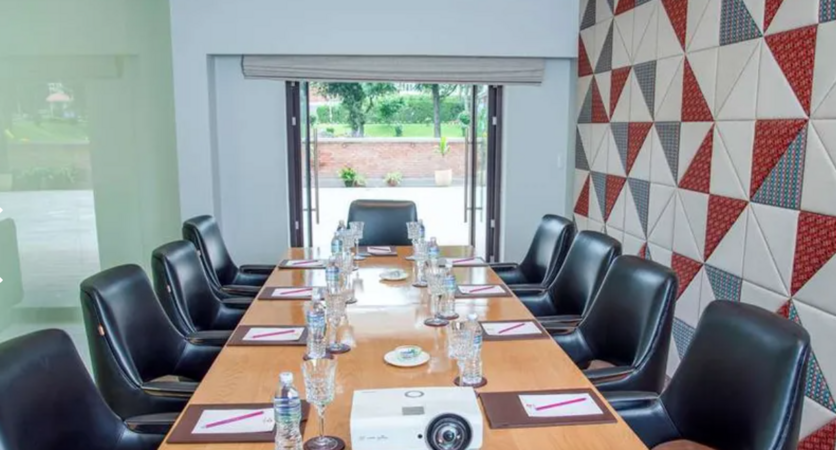
Set in Kathmandu, this classroom is well located near Tahachal Marg with all amenities and WiFi.
For Sales Enquires and Meetings
All our centres have batches running on weekdays and weekends hence, please note that, in most cases, usually we are not able to organise ad hoc sales meetings, especially on our classrooms as they are all occupied with ongoing training sessions . Please contact us by e-mail or phone at least one day earlier to make an appointment with one of our consultants at our corporate offices.
Nepal, Thamel, KTM - Classroom
near Radisson , Ward 2, Kathmandu, Nepal, 44600
Set in Kathmandu, this classroom is well located near Thamel, with all amenities and WiFi.
For Sales Enquires and Meetings
All our centres have batches running on weekdays and weekends hence, please note that, in most cases, usually we are not able to organise ad hoc sales meetings, especially on our classrooms as they are all occupied with ongoing training sessions . Please contact us by e-mail or phone at least one day earlier to make an appointment with one of our consultants at our corporate offices.
This practical course on Nepal delves into standard modeling languages such as UML and BPMN for effectively capturing and visualizing business requirements. Participants will develop hands-on competencies in creating use case diagrams, wireframes, and interactive prototypes to strengthen communication within business analysis initiatives.
This three-day instructor-led training in Nepal explores SysML and MagicDraw/Cameo through a practical case study. It emphasizes core modeling concepts and hands-on exercises, equipping systems engineers to build, trace, and analyze complex models for real-world systems engineering workflows.
The "Object-Oriented Analysis and Design Using UML" course is aimed at analysts, designers, developers, testers, and project managers, offering an introduction to system modeling using UML. Through a case study, participants gain skills in modeling requirements, business processes, and documenting functional and non-functional requirements. Subsequent stages of the training include the analytical model, design phases—both static and dynamic—and practical application of the Enterprise Architect modeling tool. The training provides a solid basis for effectively modeling processes in enterprises, utilizing UML at all stages of software development.
Business analysis is the process of examining, understanding, and defining business needs in order to develop solutions that meet those needs. It is a key element in the change management process within an organization and in designing new business solutions. Business analysis aims to ensure that technological, procedural, or organizational solutions fulfill business goals and needs. It is a critical component in ensuring the effectiveness of projects and organizational changes, by ensuring that implemented solutions are accurate, feasible, and fully aligned with business requirements.
Delivered in Nepal, this course covers BPMN, DMN, and CMMN—the leading OMG standards for process, decision, and case modelling. You will acquire core concepts, familiarize yourself with basic symbols, and master the modelling techniques for each framework. The course helps you identify the optimal standard to apply when designing efficient processes and decisions.
This instructor-led, live training in Nepal (online or onsite) is aimed at beginner-level / intermediate-level / advanced-level individuals who wish to use to develop skills in business and process modeling for a better understanding of the organization, products, and dependencies between processes, data, and stakeholders.
By the end of this training, participants will be able to:
Understand the role of models as key communication tools in business analysis.
Be able to select the right modeling method (BPMN, UML, SIPOC, Business Model Canvas) for a specific business goal.
Know how to decompose complex business processes into clear diagrams.
Identify touchpoints between processes, data, and system actors.
Be able to assess the correctness and effectiveness of created business models.
This 14-hour Design Patterns course in Nepal empowers you to leverage established design patterns, potentially saving hundreds of hours in design and testing phases. You will gain the ability to create custom organization-specific patterns, estimate cost efficiencies, and streamline your design processes using UML and Java-based examples.
Through a blend of lectures, demonstrations, and interactive labs, this course illustrates the foundational principles for developing and sustaining an Enterprise Architecture (EA) by leveraging the Unified Architecture Framework (UAF) version 1.2.
This course is designed to impart the core principles of the Systems Modeling Language (SysML), its application via the MagicDraw/Cameo software suite, fundamental MBSE simulation techniques, and industry best practices. The training explores the basics of creating templates and generating reports within the MagicDraw/Cameo tools, while also explaining how macros and scripts function internally and their potential applications.
This course is structured to teach the core principles of the Systems Modeling Language (SysML), its application via MagicDraw/Cameo software, fundamental Model-Based Systems Engineering (MBSE) simulation techniques, and MBSE best practices. The training also aims to equip professionals with a background in architectural simulation, introduce the Simulation Toolkit plugin, demonstrate simulations across various diagram types, and show how to integrate diagram simulations to automate architectural processes.
This course is tailored to teach the fundamentals of the Systems Modeling Language (SysML), its practical application via MagicDraw/Cameo software, essential MBSE simulation techniques, and industry best practices. The training covers the core concepts and features of validation rules, validation suites, and model metrics, while also introducing the key aspects of developing and utilizing model queries in MagicDraw/Cameo.
This course is structured to teach the core principles of the Systems Modeling Language (SysML), its implementation via MagicDraw/Cameo software, fundamental MBSE simulation techniques, and industry best practices. The training offers an introductory overview of the key concepts and capabilities of CATIA No Magic’s Teamwork Cloud, as well as an introduction to Domain Specific Languages (DSL) within MagicDraw.
Designed by OMG OCEB 2 Content Developers, this Nepal training equips you for the OCEB v2 Fundamental exam. It explores business goals, process basics, BPMN modelling, and governance frameworks, helping you establish a robust foundation in business process management.
This 3-day training in Nepal equips system engineers with UML 2 and SysML skills for efficient requirements gathering and embedded software design. Learn to trace business rules to implementation, modeling blocks and interactions using Enterprise Architect for agile, coherent system architectures.
This hands-on course in Nepal provides a comprehensive understanding of systems modelling via the most recent OMG SysML specification. By covering both notation and semantics, it empowers students to leverage their skills effectively with any suitable system modelling method or tool for real-world implementation.
This instructor-led, live training in Nepal (online or onsite) is aimed at project managers, architects, and system engineers who wish to model and evaluate systems using SysML V2 features and capabilities.
By the end of this training, participants will be able to specify, analyze, design, and verify complex systems using SysML V2.
In this instructor-led, live training in Nepal (online or onsite), participants will learn how to use SysML as implemented in Enterprise Architect (EA) to carry out system requirements analysis and modeling.
By the end of this training, participants will be able to:
Understand and apply SysML to Systems Engineering projects, using a Model Based Systems Engineering (MBSE) approach.
Identify system requirements based on use case models.
A hands-on workshop in Nepal designed for analysts and developers, emphasizing UML modeling with Enterprise Architect. Discover advanced features like MDA and XMI to enhance problem analysis and design documentation, while mastering best practices for efficient system modeling.
This instructor-led training in Nepal readies you for the OCUP 2 Foundation Exam by exploring core UML concepts. You will learn to build simple models and gain a deep understanding of class, sequence, and activity diagrams. It is ideal for developers, architects, and analysts aiming to achieve certification.
This Nepal course empowers developers and architects to succeed in the UML2 Intermediate exam. It delves into complex modeling techniques, classification structures, and state machine logic. By mastering these essential design components and learning to build detailed UML models, you will be well-positioned to join a UML development team as a qualified senior professional.
This course in Nepal empowers managers, consultants, and analysts with the capability to model business processes using UML and BPMN. Learners will gain the skills to document current workflows, design improved flows, and create high-quality diagrams that effectively bridge the gap between business needs and system architecture.
Read more...
Last Updated:
Testimonials (8)
Prepared project on which we could work from the start without wasting time to set up files not needed in exercises. Readiness to answer all questions that came up from participants.
Robert Walczak - Hitachi Energy
Course - Systems Modeling with SysML and Enterprise Architect (EA)
pointing about 'tricky' questions while explanation
The trainer shared his knowledge and led great atmosphere.
Agnieszka Dubanska - Narodowy Fundusz Zdrowia
Course - Modelowanie procesów biznesowych z wykorzystaniem UML i BPMN
complete, subject-focused, with multiple exercises and examples
Grzegorz Sposob - ASSECO POLAND S.A.
Course - OCUP2 UML Certification - Preparing for the UML2 Intermediate exam.
The explanations and interactivity of the trainer, he really brought the subject well; and even-though I was probably not experienced enough, I did learn a lot from it!
Pieter Bruynseels - Spot Buy Center BV
Course - Design Patterns
Labs and pace were great
Morgan - NSWCDD Dam Neck
Course - Applying SysML with MagicDraw/Cameo
- trainer's knowledge
- trainers laid-back style
Maciej - EY GLOBAL SERVICES (POLAND) SP Z O O
Course - OCEB2 OMG Certified Expert in BPM - BPM 2 Fundamental Exam Preparation
The direct correlation with our work subject in the examples
Online OMG training in Nepal, OMG training courses in Nepal, Weekend OMG courses in Nepal, Evening OMG training in Nepal, OMG instructor-led in Nepal, OMG trainer in Nepal, OMG one on one training in Nepal, OMG instructor in Nepal, Online OMG training in Nepal, OMG private courses in Nepal, Weekend OMG training in Nepal, OMG boot camp in Nepal, OMG coaching in Nepal, OMG classes in Nepal, Evening OMG courses in Nepal, OMG instructor-led in Nepal, OMG on-site in Nepal