NobleProg delivers specialized Software Testing training opportunities within the vibrant landscape of Bhutan. Tailored to the unique professional needs of this Himalayan nation, our courses empower local businesses and individuals with cutting-edge skills in Software Testing. Participants benefit from expert-led instruction designed to drive innovation and sustainable growth in Bhutan's evolving economy.
Whether online or on-site, our instructor-led live Software Testing courses leverage interactive discussions and hands-on practice to help you apply specialist knowledge and skills, significantly enhancing testing productivity and efficiency.
Software Testing training is offered as "online live training" or "onsite live training." Online live training (also known as "remote live training") is delivered through an interactive remote desktop session. Onsite live training can be conducted directly at the client's location in Bhutan or at NobleProg corporate training centers in Bhutan.
NobleProg — Your Local Training Provider
Bhutan, Thimphu - Classroom
near Le Méridien , Chorten Lam, Thimphu, Bhutan, 11001
Set in Thimphu, this classroom is well located in Chorten Lam with all amenities and WiFi.
For Sales Enquires and Meetings
All our centres have batches running on weekdays and weekends hence, please note that, in most cases, usually we are not able to organise ad hoc sales meetings, especially on our classrooms as they are all occupied with ongoing training sessions . Please contact us by e-mail or phone at least one day earlier to make an appointment with one of our consultants at our corporate offices.
Bhutan, Paro - Classroom
near Le Méridien Riverfront, thimphu hwy, Shaba, Paro, Bhutan, 12001
Set in Paro, this classroom is well located near Paro-Thimphu Highway around 4 km from the airport, and 7 km from Rinpung Dzong, and possess all amenities and WiFi.
For Sales Enquires and Meetings
All our centres have batches running on weekdays and weekends hence, please note that, in most cases, usually we are not able to organise ad hoc sales meetings, especially on our classrooms as they are all occupied with ongoing training sessions . Please contact us by e-mail or phone at least one day earlier to make an appointment with one of our consultants at our corporate offices.
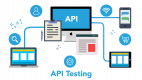
This instructor-led, live training on Bhutan delves into the core concepts and practical fundamentals of test automation with Apigee. It helps participants develop essential skills to automate API testing, validate performance, and integrate these processes into CI/CD pipelines to meet real-world business objectives.
This instructor-led live training, offered online or onsite, targets intermediate-level testers and developers seeking to enhance their skills in automation testing. Key tools covered include Selenium and TestComplete, along with integration strategies for Oracle APEX and .NET Core.
By the conclusion of this training, participants will be equipped to:
Set up and configure Selenium and TestComplete for automation purposes.
Develop sophisticated test scripts and frameworks.
Integrate automation testing with Oracle APEX and .NET Core applications.
Leverage machine learning techniques to boost test automation.
Effectively transition from manual to automated testing.
Manage outsourced testing projects and maintain high-quality standards.
This instructor-led, live training in Bhutan (online or onsite) is designed for intermediate to advanced test engineers and automation specialists who wish to explore advanced TestStand features and techniques to maximize the efficiency and effectiveness of their test automation.
Upon completion of this training, participants will be able to:
Leverage advanced features and functionalities of TestStand to enhance test automation workflows.
Customize user interfaces and develop sophisticated test sequences.
Implement advanced techniques for result processing and reporting.
Integrate TestStand with external databases, systems, and hardware.
Apply best practices for maintaining, managing, troubleshooting, and debugging complex test sequences.
This instructor-led, live training in Bhutan (online or onsite) is designed for beginner-level test engineers and automation engineers who wish to learn the fundamentals of using TestStand to create, execute, and manage automated test sequences.
Upon completion of this training, participants will be able to:
Grasp the core concepts and architecture of TestStand.
Construct test sequences and run them effectively.
Leverage TestStand's collaborative capabilities for team-based test development workflows.
Integrate TestStand with various software tools and test instruments.
Develop custom test steps and plugins within TestStand.
This instructor-led, live training in Bhutan (online or onsite) is aimed at experienced automation test engineers who want to learn advanced C# programming concepts for automation testing.
By the end of this training, participants will be able to:
Understand advanced C# programming concepts and best practices.
Apply advanced object-oriented programming principles to create efficient and flexible automation solutions.
Design and develop modular and reusable automation frameworks using industry best practices.
This live, instructor-led session on Bhutan guides Java developers in constructing and validating REST APIs using Jersey. Learners will engage in setting up projects, deploying endpoints, managing security, and conducting tests with Postman. It is perfectly suited for beginners looking to acquire practical skills in modern API design.
This instructor-led, live training in Bhutan (available online or onsite) is designed for beginner to intermediate-level professionals aiming to gain practical experience in effectively planning, executing, and managing UAT processes.
Upon completing this training, participants will be equipped to:
Comprehend the significance and role of UAT within the software development lifecycle.
Create and conduct UAT test cases and scenarios.
Utilize industry-standard tools to oversee and monitor UAT progress.
Effectively identify, report, and monitor defects.
Collaborate with developers, testers, and stakeholders to ensure successful UAT execution.
This instructor-led, live training in Bhutan (online or on-site) is aimed at intermediate-level automation developers who wish to harness the power of BlazeMeter for automation tasks, enabling them to build intelligent and interactive automation solutions.
By the end of this training, participants will be able to:
Understand the fundamentals of BlazeMeter and its role in automation.
Utilize BlazeMeter to automate tasks and processes.
Develop custom automation solutions using BlazeMeter.
Apply best practices for leveraging BlazeMeter in automation projects.
This live, instructor-led course in Bhutan prepares intermediate and advanced testers for the CTAL-TAE exam. It covers designing scalable automation architectures, evaluating frameworks, and integrating tests into CI/CD pipelines, while offering hands-on labs and exam simulations to ensure success.
This instructor-led live training in Bhutan (online or onsite) is aimed at intermediate-level quality assurance engineers who wish to use Apache JMeter for software performance testing.
By the end of this training, participants will be able to:
Understand performance testing principles and the role of Apache JMeter.
Install, configure, and navigate Apache JMeter to create and execute test plans.
Design comprehensive test plans with advanced features like parameterization and scripting.
Analyze test results to identify performance issues and optimize applications.
Conduct distributed testing and apply best practices in real-world scenarios.
Prepare for the ISTQB CTAL-TM certification through this instructor-led training in Bhutan. Gain expertise in advanced test management, risk-based testing, and strategic decision-making via interactive sessions and practical exercises, all aligned with the official syllabus for test managers and QA professionals.
This instructor-led live training in Bhutan (online or onsite) targets intermediate testers who aim to learn how to conduct performance testing using the LoadRunner Enterprise platform.
By the conclusion of this training, participants will be able to:
Understand the fundamentals of performance testing and its significance in software development.
Effectively plan and design performance tests based on business requirements and system specifications.
Configure and manage test environments, including servers, networks, and client systems.
Execute performance tests, monitor system resources, and collect relevant performance metrics.
Analyze test results and identify performance bottlenecks.
Generate comprehensive reports to communicate test findings and recommendations.
This instructor-led, live training in Bhutan (available online or onsite) targets intermediate-level software testing professionals who wish to become certified in TOSCA and demonstrate proficiency in test automation using Tricentis Tosca.
Upon completion of this training, participants will be able to:
Gain a clear understanding of the TOSCA certification structure and requirements.
Master TOSCA concepts, including test case design, automation, and execution.
Apply best practices for creating reusable and maintainable test cases.
Prepare effectively for both the practical and theoretical components of the TOSCA certification exam.
This practical workshop in Bhutan empowers software testing professionals with essential Selenium WebDriver capabilities. Develop resilient automated test frameworks, refine advanced locating strategies, and implement design patterns for cross-browser validation in production scenarios.
Discover how to develop robust test automation frameworks using the Selenium suite and integrate seamless continuous testing workflows with Jenkins. This course in Bhutan empowers QA engineers with hands-on expertise in WebDriver, TestNG, and Grid, enabling efficient distributed and cross-browser testing within agile settings.
In this instructor-led, live training held in Bhutan, participants will learn how to enhance an automated test suite using advanced techniques to drive Selenium.
By the end of this training, participants will be able to:
Resolve complex web application test automation issues with Selenium.
Apply regular expressions and pattern-based verification techniques.
This instructor-led, live training in Bhutan (online or onsite) provides an introduction to automated testing using Selenium WebDriver and C# within Visual Studio. If you lack prior experience with C# or want to refresh your skills, we recommend the course: C# for Automation Test Engineers.
Enhance your software testing capabilities with HP UFT, the industry-standard tool. This 21-hour instructor-led program in Bhutan provides a practical approach to recording-and-playback scripts, object identification, parameterized testing, reusable actions, web application testing, and API validation.
Acquire practical mobile automation capabilities through this Appium training in Bhutan. You will learn to configure the framework, craft stable test scripts for both Android and iOS, identify specific elements, and generate insightful reports. Designed for QA engineers aiming to elevate their careers in mobile quality assurance.
This instructor-led course in Bhutan delves into Selenium 4 and Python for web test automation, covering WebDriver, Page Object Model, and Grid. Participants will learn to craft robust scripts using Pytest, embed tests into CI/CD pipelines, and adopt best practices for stable, scalable automation suites.
This instructor-led, live training in Bhutan is designed for anyone interested in learning Java for the purpose of test automation. It is a streamlined, intensive course with plenty of hands-on exercises to get participants ramped up quickly with the essential programming skills needed to apply to software automation testing. The focus is on the Java fundamentals which can be directly and immediately applied to test automation.
This course does not cover in depth test automation frameworks such as Selenium. It also bypasses the conventional "Hello World" approach to learning Java, as this is not a course on application development. This course is squarely aimed at getting participants up and running quickly with test automation. If you are already versed in Java and wish to get straight into testing with Selenium, please check out: Introduction to Selenium (https://www.nobleprog.com/cc/tesautsel).
This instructor-led, live training in Bhutan (online or onsite) is aimed at engineering and design professors who wish to understand, apply, and teach modern software development practices relevant to systems engineering, civil engineering, design, and architecture disciplines.
This course in Bhutan empowers test managers, QA specialists, and developers by explaining how Agile frameworks such as SCRUM incorporate testing. Participants will gain the skills to design and execute test plans for sample applications, mastering requirements analysis, ROI calculation, and sprint planning to enhance real-world testing efficiency.
This two-day Agile software testing course in Bhutan delves into foundational concepts within Scrum development. Participants utilize the Agile Testing Quadrants model to investigate modern principles, test automation, and both black-box and white-box methodologies to elevate team effectiveness.
This programme is tailored to equip software QA engineers with critical AI expertise and practical capabilities, aiming to boost testing efficiency and improve software quality metrics. Participants will develop a solid grasp of artificial intelligence, machine learning, and their practical applications in test automation, bug identification, test case creation, risk-based testing, and performance evaluation.
Combining theoretical insights, live demonstrations, and hands-on labs, this course enables QA specialists to harness AI for minimising manual workload, expanding test coverage, and enhancing defect detection precision—ultimately elevating the overall efficiency and efficacy of QA operations.
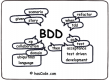
This instructor-led, live workshop begins with an introduction to BDD, explaining what it is and how companies utilize it to promote effective software design, development, and testing. We approach this from a non-engineering standpoint, keeping the focus on end-users, their requirements, language, and mindset. We also tackle the communication challenges business stakeholders may encounter as they collaborate more closely with their technical peers.
By the conclusion of this training, participants will learn how to:
Write concise user stories that capture the usage patterns of actual software users.
Translate user stories into BDD's behavioral language (Given, When, Then).
Derive test cases from these stories for engineers to implement and test.
Understand the relationship between product requirements, acceptance criteria, and test cases.
Demystify technical jargon that obstructs communication and understanding.
Install and use effective tools for writing BDD feature files.
Understand and appreciate the processes involved once work is handed to engineers.
Take a more active role in the iterative development cycle.
This instructor-led ISTQB CTAL-TA course in Bhutan focuses on advanced test analysis, risk-based design, and quality assurance. Gain the ability to assess requirements, handle defects, and apply static testing techniques within Agile and Waterfall frameworks to deliver robust software quality.
Cypress is a comprehensive end-to-end testing framework that enables users to configure, write, execute, and debug tests for any frontend application or website.
This live training, facilitated by an instructor and available either online or at the client's premises, is designed for software testers looking to leverage Cypress for test automation.
Upon completing this training, participants will be equipped to:
Conduct end-to-end automated testing using Cypress.
Develop integration and unit tests within web applications.
Utilize Cypress as a viable alternative to Selenium.
Course Structure
Engaging lectures and group discussions.
Extensive exercises and practical sessions.
Hands-on practice in a live laboratory setting.
Customization Options for the Course
For those seeking a tailored training experience for this course, please get in touch with us to make arrangements.
This instructor-led, live training in Bhutan combines ISTQB CTFL v4.0 fundamentals with modern AI-assisted testing tools. Participants gain structured QA knowledge, practical automation skills, and hands-on experience with AI-driven test case generation, self-healing automation, and defect analysis.
This instructor-led live training, conducted in Bhutan (online or onsite), targets QA professionals and technical team members at beginner, intermediate, or advanced levels who aim to use Katalon Studio to transition from manual testing to automated regression testing.
By the end of this training, participants will be able to explain QA and automation fundamentals, automate REST API checks, build web UI regression tests, and apply Katalon Studio for maintainable test execution.
Enhance your performance tuning capabilities in this comprehensive 35-hour hands-on program conducted in Bhutan. You will learn to interpret test results and monitor hardware, network, and database components using industry-standard tools. This course is perfectly suited for testers and engineers aiming to gain advanced architectural insights through rigorous lab-based experience.
In this instructor-led, live training conducted in Bhutan, participants will learn how to leverage TestComplete's features, such as the test object model, checkpoints, name mapping, and UI, to perform automated testing on desktop, web, and mobile applications.
By the end of this training, participants will be able to:
Create, record and run functional tests.
Create a scalable and maintainable test framework.
Create checkpoints, adjust tests for multiple devices and analyze test results.
User Acceptance Testing (UAT) is a pivotal final stage in the process of launching a new application, system, or feature.
This practical and interactive workshop enables participants to plan, execute, and document User Acceptance Testing effectively, keeping the business user’s perspective and requirements at the forefront.
Read more...
Last Updated:
Testimonials (6)
Very interesting subject and very knowledgeable trainer
Pedro Miguel Costa - Natixis
Course - Automation Testing with Cypress
workshops, practical cases
Joanna Nowak - LKQ Polska Sp. z o. o.
Course - Introduction to Agile Testing
way of teaching is good.. explains with patience
Ramya Krishna - Multichoice
Course - Advanced C# for Automation Test Engineers
Trainer knows very well about the teaching materials and the virtual machine given is very helpful.
NOORFATYN NABILAH ROHAIZAT - Iverson Associates Sdn Bhd
Course - Performance engineering/tuning
Use of powerpoint / paint to create the training materials as we went along. Benefit of the trainers experience. Use of the "cinema booking tool" example and our break out group case studies really brought the approach to life
Mark - Leeds Building Society
Course - BDD for Non-Programmers: Live Workshop
There has been a wide coverage of many topics.
This fostered our own discussong internally
Online Software Testing training in Bhutan, Software Testing training courses in Bhutan, Weekend Software Testing courses in Bhutan, Evening Software Testing training in Bhutan, Software Testing instructor-led in Bhutan, Software Testing private courses in Bhutan, Software Testing instructor-led in Bhutan, Evening Software Testing courses in Bhutan, Software Testing classes in Bhutan, Software Testing instructor in Bhutan, Weekend Software Testing training in Bhutan, Software Testing one on one training in Bhutan, Software Testing boot camp in Bhutan, Software Testing coaching in Bhutan, Online Software Testing training in Bhutan, Software Testing on-site in Bhutan, Software Testing trainer in Bhutan