NobleProg delivers expert-led Design Thinking training courses across Nepal, empowering professionals and organizations with the latest industry skills. Leveraging our extensive presence in the Indian subcontinent, we provide accessible and high-quality learning solutions tailored to the local market. Participants gain valuable insights through interactive sessions designed to enhance career growth and organizational performance.
Delivered online or on-site, our instructor-led live Design Thinking workshops use real-world case studies and interactive exercises to show how to leverage the five stages of Design Thinking. The goal is to gain a deeper understanding of challenges faced by end-users of products or services, thereby crafting the most effective solutions to address them.
Design Thinking training can be accessed as either "online live training" or "onsite live training". Online live training (also known as "remote live training") is conducted via an interactive remote desktop session. Onsite live training can be held at your customer premises in Nepal or at NobleProg corporate training centers located in Nepal.
NobleProg -- Your Local Training Partner
Nepal, Kathmandu - Classroom
near Soaltee, Tahachal Marg, Kathmandu, Nepal, 44600
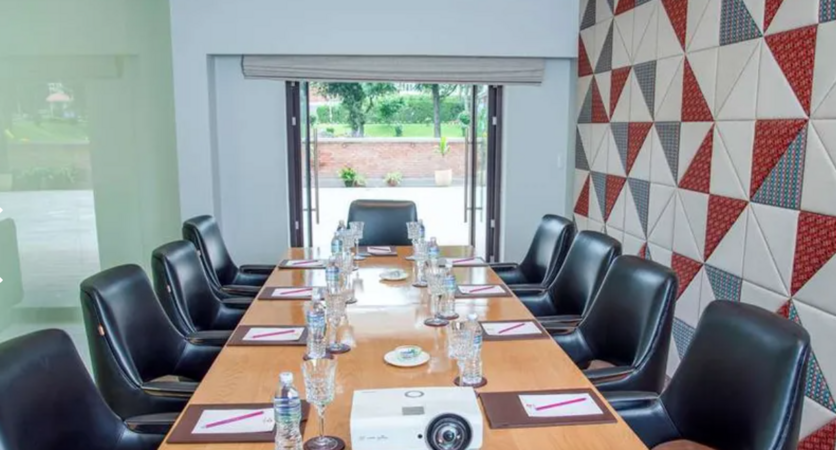
Set in Kathmandu, this classroom is well located near Tahachal Marg with all amenities and WiFi.
For Sales Enquires and Meetings
All our centres have batches running on weekdays and weekends hence, please note that, in most cases, usually we are not able to organise ad hoc sales meetings, especially on our classrooms as they are all occupied with ongoing training sessions . Please contact us by e-mail or phone at least one day earlier to make an appointment with one of our consultants at our corporate offices.
Nepal, Thamel, KTM - Classroom
near Radisson , Ward 2, Kathmandu, Nepal, 44600
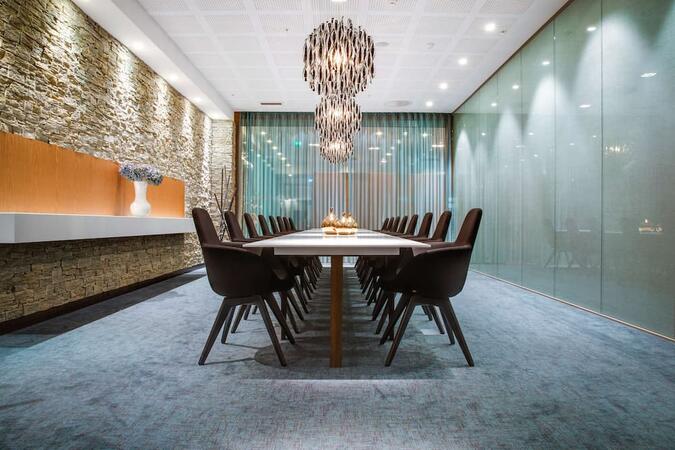
Set in Kathmandu, this classroom is well located near Thamel, with all amenities and WiFi.
For Sales Enquires and Meetings
All our centres have batches running on weekdays and weekends hence, please note that, in most cases, usually we are not able to organise ad hoc sales meetings, especially on our classrooms as they are all occupied with ongoing training sessions . Please contact us by e-mail or phone at least one day earlier to make an appointment with one of our consultants at our corporate offices.
In this Nepal course, teams explore Design Thinking to resolve challenges through empathy, ideation, and prototyping. By concentrating on the Empathize stage, you will align pain points with internal stakeholder needs, converting insights into actionable outcomes through dynamic collaborative activities.
This live training in Nepal empowers teams and leaders by focusing on the Empathize and Define stages of Design Thinking. Learners will refine their active listening and empathy mapping skills, and apply the 5 Whys technique to identify root causes and draft precise, actionable problem statements for internal clients.
This instructor-led, live training in Nepal (online or onsite) is aimed at beginner-level to intermediate-level professionals who wish to understand and apply Design Thinking methodologies to drive innovation and improve business solutions.
By the end of this training, participants will be able to:
Understand the core principles of Design Thinking and its role in innovation.
Apply the five phases of Design Thinking to problem-solving.
Utilize ideation techniques and tools to foster creativity.
Implement Design Thinking strategies to improve processes and enhance efficiency.
This instructor-led, live training in Nepal (online or onsite) is aimed at beginner-level to intermediate-level participants who wish to solve everyday workplace challenges through gamification techniques.
By the end of this training, participants will be able to:
Grasp the core principles of Design Thinking and how they apply to problem-solving.
Integrate gamification techniques to boost engagement and drive innovation.
Create creative and practical solutions for common workplace issues.
Work effectively across teams to put problem-solving strategies into action.
Utilise iterative methods to hone solutions through feedback and experimentation.
This instructor-led, live training in Nepal (online or onsite) is designed for beginner-level leaders and HR professionals who wish to learn and apply Design Thinking methodologies to foster innovation, enhance problem-solving capabilities, and engage teams effectively.
By the end of this training, participants will be able to:
Equip participants with tools and methodologies to foster innovation and team engagement.
Develop skills in empathy mapping, ideation, and prototyping for solving complex challenges.
Apply Design Thinking principles to leadership and HR scenarios.
Promote a culture of innovation within tech teams.
In this instructor-led, live workshop held in Nepal (online or onsite), participants will learn how to apply the five stages of Design Thinking to better understand the problems experienced by end-users of a product or service, then develop the best approach for resolving them.
By the end of this training, participants will be able to:
Use creative strategies to match customers' needs with technologically feasible solutions.
Formulate a strategy to increase customer value and enhance product and service offerings.
The Design Thinking (DT) process comprises five distinct stages: empathize, define the problem, ideate, prototype, and test.
In an increasingly complex world, we often encounter problems that require specialized approaches. Design Thinking serves as a vital tool for navigating such complexity. By mastering design thinking, individuals can address complex issues more effectively, enhance their communication and persuasion skills, improve business outcomes, and elevate both organizational and personal behavior and performance.
Understanding DT: Learning from people and the problem at hand, identifying patterns, designing a model (including model drift), testing the model, evaluating it, and re-engineering as necessary.
The interplay between DT, innovation, and entrepreneurship.
DT methods and tools: including personas, stakeholder maps, customer journey maps, service blueprints, and business model innovation.
Application of DT: cultivating a design mindset, driving disruptive innovation, adopting an iterative approach, using agile estimation techniques, critical thinking, problem solving, teamwork, leadership readiness, communication skills, technological savviness, forward thinking, intercultural and ethical competency, emotional intelligence, self-awareness, negotiating skills, and conflict resolution.
Objectives:
To grasp the fundamentals and nuances of DT.
To explore key concepts, factors, theories, types, and models within DT.
To experiment with, experience, and practice DT.
Delivery:
This one-day (4-hour) training course is structured as follows:
Lectures (40%): Presentation of theories, concepts, models, and interactive discussions.
Group exercises (30%): Activities involving group dynamics, games, group discussions, and mock conflict resolution.
Individual activities (15%): Tasks such as writing, designing, and peer discussions.
Other components (15%): Videos and reading materials.
Note: Due to the interactive nature of this course, there is a minimum group size requirement of 3 participants.
This live, instructor-led training, available online or on-site, is tailored for beginner to intermediate PCB designers and electronics engineers aiming to build a complete and controlled PCB design workflow using Altium Designer.
Participants will work on a single, interconnected project, progressing from initial project setup and library management through schematic capture, PCB layout, and verification, to the final manufacturing outputs and controlled production release.
By the end of the training, participants will be able to:
Create and manage structured PCB projects in Altium Designer.
Develop and validate schematic designs and component libraries.
Configure PCB rules, routing parameters, DRC, and manufacturing constraints.
Generate and verify fabrication, assembly, and mechanical outputs.
Apply practical high-speed design constraints.
Manage engineering changes and controlled re-releases.
Online Design Thinking training in Nepal, Design Thinking training courses in Nepal, Weekend Design Thinking courses in Nepal, Evening Design Thinking training in Nepal, Design Thinking instructor-led in Nepal, Design Thinking trainer in Nepal, Design Thinking one on one training in Nepal, Online Design Thinking training in Nepal, Evening Design Thinking courses in Nepal, Design Thinking boot camp in Nepal, Design Thinking coaching in Nepal, Weekend Design Thinking training in Nepal, Design Thinking private courses in Nepal, Design Thinking instructor-led in Nepal, Design Thinking classes in Nepal, Design Thinking on-site in Nepal, Design Thinking instructor in Nepal