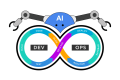
LLMs and Agents in DevOps Workflows Training Course
Large Language Models (LLMs) alongside autonomous agent frameworks such as AutoGen and CrewAI are transforming the way DevOps teams automate tasks like change tracking, test generation, and alert triage by mimicking human-like collaboration and decision-making processes.
This instructor-led live training, available both online and onsite, targets advanced-level engineers looking to design and implement DevOps automation workflows driven by large language models (LLMs) and multi-agent systems.
Upon completion of this training, participants will be capable of:
- Integrating LLM-based agents into CI/CD pipelines for intelligent automation.
- Automating tasks such as test generation, commit analysis, and change summarization using agents.
- Coordinating multiple agents to triage alerts, generate responses, and offer DevOps recommendations.
- Constructing secure and maintainable agent-powered workflows using open-source frameworks.
Course Format
- Interactive lectures and discussions.
- Extensive exercises and practical practice.
- Hands-on implementation within a live-lab environment.
Customization Options for the Course
- To arrange customized training for this course, please reach out to us.
Course Outline
Introduction to LLMs and Agent Frameworks
- Overview of large language models in infrastructure automation.
- Key concepts in multi-agent workflows.
- Use cases for AutoGen, CrewAI, and LangChain in DevOps.
Setting Up LLM Agents for DevOps Tasks
- Installing AutoGen and configuring agent profiles.
- Utilizing the OpenAI API and other LLM providers.
- Setting up workspaces and CI/CD-compatible environments.
Automating Test and Code Quality Workflows
- Prompting LLMs to generate unit and integration tests.
- Using agents to enforce linting, commit rules, and code review guidelines.
- Automated pull request summarization and tagging.
LLM Agents for Alert Handling and Change Detection
- Designing responder agents for pipeline failure alerts.
- Analyzing logs and traces using language models.
- Proactive detection of high-risk changes or misconfigurations.
Multi-Agent Coordination in DevOps
- Role-based agent orchestration (planner, executor, reviewer).
- Agent messaging loops and memory management.
- Human-in-the-loop design for critical systems.
Security, Governance, and Observability
- Addressing data exposure and LLM safety in infrastructure.
- Auditing agent actions and restricting scope.
- Tracking pipeline behavior and model feedback.
Real-World Use Cases and Custom Scenarios
- Designing agent workflows for incident response.
- Integrating agents with GitHub Actions, Slack, or Jira.
- Best practices for scaling LLM integration in DevOps.
Summary and Next Steps
Requirements
- Experience with DevOps tools and pipeline automation.
- Working knowledge of Python and Git-based workflows.
- Understanding of LLMs or prior exposure to prompt engineering.
Target Audience
- Innovation engineers and leads of AI-integrated platforms.
- LLM developers working within DevOps or automation domains.
- DevOps professionals exploring intelligent agent frameworks.
Open Training Courses require 5+ participants.
LLMs and Agents in DevOps Workflows Training Course - Booking
LLMs and Agents in DevOps Workflows Training Course - Enquiry
LLMs and Agents in DevOps Workflows - Consultancy Enquiry
Upcoming Courses
Related Courses
Agentic Development with Gemini 3 and Google Antigravity
21 HoursGoogle Antigravity serves as an agentic development environment tailored for constructing autonomous agents capable of planning, reasoning, coding, and executing tasks via Gemini 3’s multimodal capabilities.
This instructor-led live training, available in online or onsite formats, targets advanced technical professionals keen on designing, building, and deploying autonomous agents leveraging Gemini 3 and the Antigravity environment.
Upon completing this training, participants will be equipped to:
- Construct autonomous workflows that harness Gemini 3 for reasoning, planning, and execution.
- Develop agents within Antigravity that can analyse tasks, generate code, and interact with tools.
- Seamlessly integrate Gemini-driven agents with enterprise systems and APIs.
- Enhance agent behaviour, safety, and reliability in complex operational environments.
Format of the Course
- Expert demonstrations coupled with interactive discussions.
- Hands-on experimentation focused on autonomous agent development.
- Practical implementation using Antigravity, Gemini 3, and supporting cloud tools.
Course Customization Options
- Should your team require domain-specific agent behaviours or custom integrations, please reach out to us to tailor the program.
Advanced Antigravity: Feedback Loops, Learning & Long-Term Agent Memory
14 HoursGoogle Antigravity serves as a sophisticated framework for experimenting with persistent agents and emergent interactive behaviors.
This instructor-led training session, available online or onsite, is designed for advanced professionals aiming to design, analyze, and optimize agents that can retain memories, enhance performance through feedback, and evolve over extended operational periods.
By the end of this course, participants will acquire the skills to:
- Design memory structures for agent persistence.
- Implement effective feedback loops to influence agent behavior.
- Evaluate learning trajectories and address model drift.
- Integrate memory mechanisms into complex multi-agent ecosystems.
Course Format
- Expert-led discussions coupled with technical demonstrations.
- Hands-on exploration through structured design challenges.
- Application of concepts to simulated agent environments.
Customization Options
- If your organization requires tailored content or case-specific examples, please contact us to customize this training.
Advanced Mastra Integrations: APIs, Tools, Enterprise Data & External Systems
21 HoursMastra is a framework that enables deep integration between AI agents, APIs, enterprise applications, and external data systems.
This instructor-led live training, available both online and onsite, is designed for intermediate-level engineers aiming to build reliable, secure, and scalable integrations between Mastra agents and the wider enterprise ecosystem.
Upon completion of this training, participants will be equipped to:
- Implement API-driven integrations connecting Mastra agents with external services.
- Link enterprise data systems and tools to automated agent workflows.
- Apply best practices for secure data exchange and authentication.
- Design integration layers that are scalable, maintainable, and ready for production.
Course Format
- Interactive lectures and discussions.
- Hands-on integration engineering and API exercises.
- Live-lab implementation using real-world enterprise scenarios.
Course Customization Options
- Custom API scenarios, enterprise system mappings, or data-integration workshops are available upon request.
AIOps Foundation – Accredited Training
35 HoursAIOps is a swiftly advancing domain designed to meet the demands of contemporary, intricate IT environments, especially those leveraging cloud architectures. The AIOps Foundation course provides a thorough overview of the underlying concepts, technologies, and best practices associated with integrating artificial intelligence into IT operations.
The curriculum delves into the historical context of AIOps, its fundamental principles, essential tools, and the organizational hurdles IT teams often encounter when adopting these methodologies.
Upon completion, participants take an exam. Successfully passing this assessment awards the globally acknowledged AIOps Foundation certification, which remains valid for three years.
Who is this course for?
This programme is tailored for professionals and managers working in:
IT operations
DevOps and Site Reliability Engineering (SRE)
Cloud architecture
Data analysis and Data Science
Software development
IT security
Product and project management
AIOps in Action: Incident Prediction and Root Cause Automation
14 HoursAIOps (Artificial Intelligence for IT Operations) is gaining traction for anticipating incidents before they happen and automating root cause analysis (RCA) to cut down on downtime and speed up resolution times.
This instructor-led live training, available both online and onsite, is tailored for advanced IT professionals looking to implement predictive analytics, automate remediation processes, and design smart RCA workflows using AIOps tools and machine learning models.
Upon completing this training, participants will be equipped to:
- Construct and train machine learning models to identify patterns that lead to system failures.
- Automate RCA workflows by correlating data from multiple sources, including logs and metrics.
- Seamlessly integrate alerting and remediation processes into existing platforms.
- Deploy and scale intelligent AIOps pipelines within production environments.
Course Format
- Interactive lectures and discussions.
- Extensive exercises and practical practice.
- Hands-on implementation in a live lab environment.
Course Customization Options
- For customized training requests for this course, please get in touch with us to make arrangements.
AIOps Fundamentals: Monitoring, Correlation, and Intelligent Alerting
14 HoursAIOps (Artificial Intelligence for IT Operations) represents a practice that leverages machine learning and analytics to automate and enhance IT operations, specifically in monitoring, incident detection, and response.
This instructor-led live training, available online or onsite, targets intermediate-level IT operations professionals who aim to implement AIOps techniques to correlate metrics and logs, minimize alert noise, and enhance observability through intelligent automation.
Upon completing this training, participants will be able to:
- Grasp the principles and architecture of AIOps platforms.
- Correlate data across logs, metrics, and traces to pinpoint root causes.
- Alleviate alert fatigue via intelligent filtering and noise suppression.
- Utilize open-source or commercial tools to monitor and respond to incidents automatically.
Course Format
- Interactive lectures and discussions.
- Abundant exercises and practice sessions.
- Hands-on implementation within a live lab environment.
Course Customization Options
- To request customized training for this course, please contact us to make arrangements.
Building an AIOps Pipeline with Open Source Tools
14 HoursConstructing an AIOps pipeline entirely with open-source tools empowers teams to create cost-efficient and adaptable solutions for monitoring, anomaly identification, and smart alerting within production settings.
This instructor-led, live training (available online or onsite) targets advanced engineers looking to build and implement a complete AIOps pipeline using tools such as Prometheus, ELK, Grafana, and custom machine learning models.
Upon completion of this training, participants will be able to:
- Design an AIOps architecture utilising only open-source components.
- Gather and standardize data from logs, metrics, and traces.
- Apply machine learning models to identify anomalies and forecast incidents.
- Automate alerting and remediation processes using open-source tooling.
Course Format
- Interactive lectures and discussions.
- Numerous exercises and practical sessions.
- Hands-on implementation in a live-lab environment.
Customization Options
- For customized training arrangements for this course, please reach out to us.
Antigravity for Developers: Building Agent-First Applications
21 HoursAntigravity serves as a specialized development platform engineered for creating AI-driven, agent-centric applications.
This instructor-led, live training, available both online and on-site, targets intermediate-level developers aiming to develop practical applications using autonomous AI agents within the Antigravity ecosystem.
Upon completion of this training, participants will be capable of:
- Developing applications that leverage autonomous and coordinated AI agents.
- Utilizing the Antigravity IDE, editor, terminal, and browser for complete end-to-end development.
- Orchestrating multi-agent workflows via the Agent Manager.
- Embedding agent functionalities into robust, production-grade software systems.
Course Format
- A blend of presentations with in-depth technical demonstrations.
- Ample hands-on practice coupled with guided exercises.
- Real-world implementation tasks within the live Antigravity environment.
Customization Options for the Course
- For content tailored to align with your specific development stack, please reach out to us to organize a customized version of this training.
Getting Started with Antigravity: An Introduction to Agent-First IDEs
14 HoursGoogle Antigravity is an agent-centric development environment crafted to streamline engineering workflows via intelligent automation.
This instructor-led, live training (available online or onsite) targets beginner-level practitioners keen to grasp the fundamentals of Antigravity and comprehend how agent-driven coding environments boost productivity.
Upon completing this training, participants will be equipped to:
- Install and set up Google Antigravity.
- Navigate and grasp both the Editor View and Manager View.
- Collaborate effectively with agents to automate routine development tasks.
- Utilize Antigravity to generate, refine, and manage project files.
Course Format
- Instructor-led explanations backed by real-time demonstrations.
- Guided exercises emphasising hands-on interaction with agents.
- Practical exploration of core Antigravity features within a controlled lab environment.
Customisation Options
- Should you require a bespoke version of this training, please contact us to organise a customised programme.
Antigravity for Web Automation & Browser-Based Tasks
21 HoursGoogle Antigravity serves as a platform for developing agents capable of interacting with web applications, browser environments, and multi-surface workflows.
This instructor-led, live training (available online or onsite) is designed for intermediate-level professionals who wish to build, automate, and test browser-based workflows using Google Antigravity.
Upon completion of the training, participants will be able to:
- Create agents that interact with web applications in a browser surface.
- Automate end-to-end workflows across browser contexts.
- Validate and troubleshoot agent behavior in UI-driven environments.
- Implement cross-surface automation strategies using Antigravity.
Format of the Course
- Guided instruction supported by demonstrations.
- Practical, hands-on activities and scenario-based exercises.
- Implementation of agent workflows in an interactive lab environment.
Course Customization Options
- For customized training requirements, please contact us to tailor the course to your objectives.
Enterprise AIOps with Splunk, Moogsoft, and Dynatrace
14 HoursEnterprise-grade AIOps platforms such as Splunk, Moogsoft, and Dynatrace offer robust functionalities for identifying anomalies, linking alerts, and automating remediation actions within expansive IT infrastructures.
This instructor-led live training (available online or onsite) targets intermediate-level enterprise IT professionals looking to incorporate AIOps solutions into their existing observability stacks and operational processes.
Upon completion of this training, participants will be equipped to:
- Set up and integrate Splunk, Moogsoft, and Dynatrace into a cohesive AIOps framework.
- Correlate metrics, logs, and events across distributed systems using AI-driven analysis.
- Automate incident detection, prioritization, and response through built-in and custom workflows.
- Enhance performance, decrease MTTR, and boost operational efficiency at an enterprise scale.
Course Delivery Format
- Interactive lectures and discussions.
- Numerous exercises and practical practice sessions.
- Hands-on implementation within a live-lab environment.
Customization Options
- To arrange a customized training session for this course, please get in touch with us.
Implementing AIOps with Prometheus, Grafana, and ML
14 HoursPrometheus and Grafana are industry-standard tools for ensuring observability in contemporary infrastructure. By integrating machine learning, these tools gain the ability to provide predictive and intelligent insights, thereby automating operational decisions.
This instructor-led live training, available both online and onsite, is designed for intermediate-level observability professionals aiming to modernize their monitoring infrastructure. The course focuses on integrating AIOps practices using Prometheus, Grafana, and machine learning techniques.
Upon completing this training, participants will be equipped to:
- Configure Prometheus and Grafana to ensure comprehensive observability across various systems and services.
- Collect, store, and visualize high-quality time-series data effectively.
- Apply machine learning models for effective anomaly detection and forecasting.
- Develop intelligent alerting rules driven by predictive insights.
Course Format
- Interactive lectures and discussions.
- Extensive exercises and practical practice sessions.
- Hands-on implementation within a live lab environment.
Customization Options
- For customized training requests for this course, please reach out to us to make arrangements.
AI Agent Development with Mastra
14 HoursThis instructor-led live training session, available both online and onsite, targets intermediate software developers and engineering teams aiming to construct scalable and observable AI systems using Mastra.
Upon completion of this training, participants will be equipped to:
- Grasp Mastra’s architecture and its integration mechanisms with Large Language Models (LLMs) and external APIs.
- Architect and implement AI agents and workflows utilizing TypeScript.
- Leverage Mastra’s observability and memory capabilities to oversee and enhance agent performance.
- Deploy production-grade AI applications by harnessing Mastra’s framework functionalities.
Managing Agent Workflows in Google Antigravity: Orchestration, Planning and Artifacts
14 HoursGoogle Antigravity serves as an agent-centric development platform designed to orchestrate, supervise, and coordinate AI-driven coding and automation workflows.
This instructor-led training session, available either online or on-site, targets intermediate-level professionals seeking to design, manage, and optimize multi-agent workflows within the Google Antigravity environment.
Upon completing this training, participants will acquire the following skills:
- Configuring agent responsibilities and orchestration pipelines via the Manager interface.
- Generating and interpreting Antigravity artifacts, such as task lists, plans, logs, and browser recordings.
- Implementing verification strategies to maintain transparency and auditability of agent actions.
- Optimizing multi-agent collaboration for complex development and operational tasks.
Course Format
- Guided presentations combined with practical demonstrations.
- Scenario-based exercises focused on addressing real-world workflow challenges.
- Hands-on experimentation within a live Antigravity workspace.
Course Customization Options
- For a customized version of this course, please reach out to us to discuss specific requirements.
Testing & Verifying Agent-Driven Code: Quality Assurance in Antigravity
14 HoursAntigravity is a framework that represents advanced agent-driven development workflows.
This instructor-led, live training (online or onsite) is aimed at intermediate to advanced professionals who wish to verify, validate, and secure the output produced by AI agents working within Antigravity-driven environments.
Upon completing this training, participants will be able to:
- Assess the accuracy and safety of agent-generated code artifacts.
- Use structured techniques to verify agent-executed tasks.
- Analyze browser recordings and trace agent activity effectively.
- Apply QA and security principles to ensure the reliability of agent workflows.
Format of the Course
- Instructor-guided technical briefings and discussions.
- Practical exercises focused on verifying real agent workflows.
- Hands-on testing and validation within a controlled lab environment.
Course Customization Options
- Adaptation of scenarios, workflows, and testing examples is available upon request.